
VULNERABILITY
Understanding Vulnerability: Why Do People Respond Differently?
Every person carries a different combination of strengths and vulnerabilities. Two people can experience the same difficult situation and respond very differently. One person may be able to cope and recover, while another may feel completely overwhelmed. This difference is influenced by vulnerability. Vulnerability refers to the factors that can make a person more likely to experience severe emotional distress when faced with stress or adversity. These factors may include genetics, differences in brain functioning, childhood experiences, trauma, mental health conditions, chronic physical illness, substance use, social isolation, discrimination, financial difficulties, and limited access to support. Vulnerability does not mean that a person will develop suicidal thoughts. It simply means that some people may require more support when facing difficult circumstances. At the same time, protective factors such as supportive relationships, healthy coping skills, access to mental healthcare, stable living conditions, and a sense of belonging can reduce vulnerability. Understanding vulnerability helps us move away from asking, “Why couldn’t they handle it?” and towards asking, “What factors made this situation harder for them, and what support could have helped?”
KEY MESSAGE
Different people carry different vulnerabilities. Understanding them helps us replace judgement with compassion and provide support earlier.

LOAD
When Stress Quietly Begins to Build
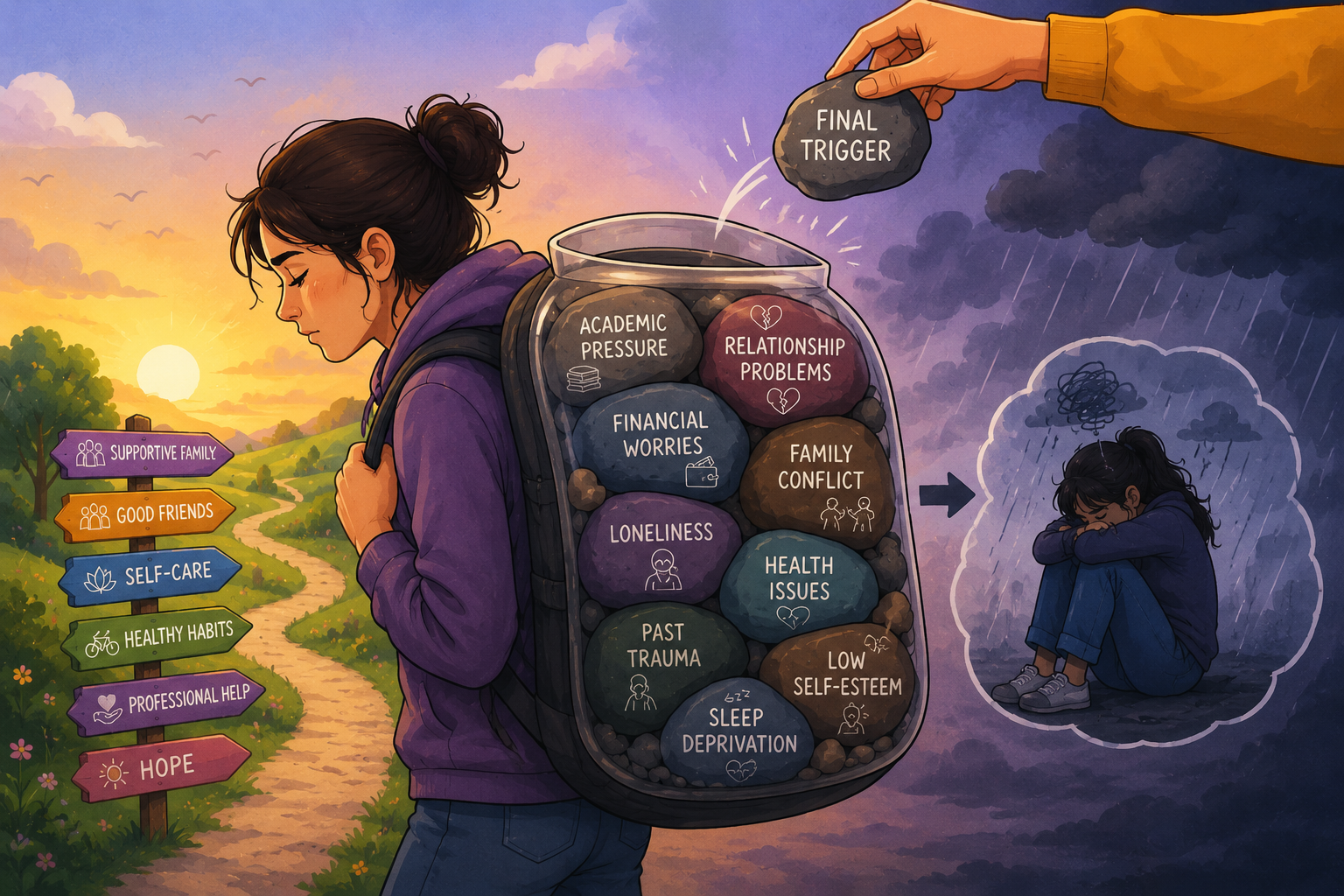
Emotional crises rarely develop overnight. Suicide is rarely the result of one single event. When someone dies by suicide, people often search for one explanation. A breakup. An examination failure. Financial difficulties. Workplace stress. A family conflict. But what appears to be the cause may actually be the final stressor added to an already heavy emotional load. Stress can accumulate over time. Academic pressure, relationship difficulties, financial insecurity, unemployment, discrimination, trauma, chronic illness, loneliness, family conflict, caregiving responsibilities, and untreated mental health conditions can gradually reduce a person’s ability to cope. Imagine emotional capacity as a container. Every unresolved stressor adds to the load. Protective factors such as supportive relationships, healthy coping skills, rest, treatment, and access to resources can help reduce that load. When stress continues to accumulate while support remains limited, a person may begin to feel trapped, hopeless, or unable to imagine a way forward. This is why suicide prevention requires us to look beyond the final event and understand the larger context of a person’s life.
KEY MESSAGE
The final trigger is rarely the whole story. Recognising emotional load early creates opportunities for support before distress becomes a crisis.
WARNING SIGNS
Recognising When Someone May Be Struggling
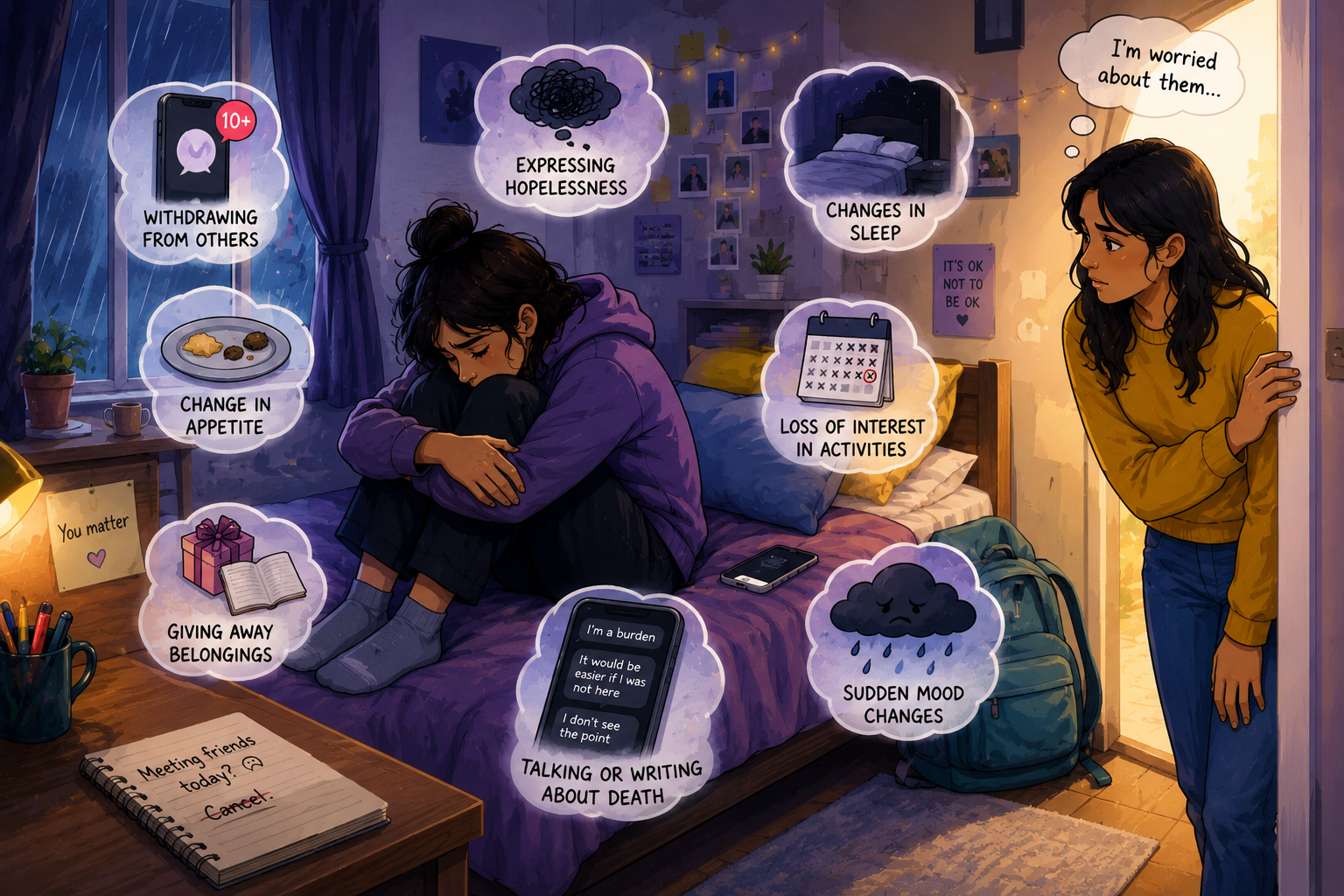
Distress often speaks through behaviour before it is spoken in words. Suicidal distress is not always visible. Some people may directly talk about suicide. Others may communicate distress through changes in their behaviour, emotions, relationships, or daily routines. Possible warning signs may include withdrawing from friends and family, expressing hopelessness, talking about feeling trapped or being a burden, losing interest in previously meaningful activities, major changes in sleep or appetite, increased alcohol or substance use, giving away valued belongings, sudden emotional changes, or frequently talking or writing about death. A sudden improvement in mood after a period of severe distress should also be taken seriously, particularly when other warning signs are present. No single warning sign can predict suicide. However, significant behavioural changes, especially when several warning signs occur together, should never be ignored. Recognising warning signs does not require us to diagnose someone. It requires us to notice changes, take distress seriously, and respond with concern.
KEY MESSAGE
Warning signs are invitations to notice, connect, and respond. Taking someone’s distress seriously can create an opportunity for early intervention.
EARLY ACTION
Knowing what to do next
Early action can interrupt a developing crisis. Recognising distress is only the first step. What we do next matters. If you are concerned about someone, begin with a calm, private conversation. Tell them what you have noticed and ask how they are feeling. It is safe to ask directly about suicide. Questions such as “Are you thinking about suicide?” do not put the idea into someone’s mind. Asking directly can permit a person to speak openly about thoughts they may have been afraid to share. Listen without judging, interrupting, lecturing, or immediately trying to solve the problem. Avoid dismissive statements such as “others have it worse” or “you should be grateful.”
Take all conversations about suicide seriously.
Encourage the person to speak with a mental health professional and help them access appropriate support. If the person appears to be in immediate danger, do not leave them alone and seek emergency assistance.
You do not need to become someone’s therapist to help them.Sometimes the most important first step is simply noticing, asking, listening, staying connected, and helping someone reach professional care.
KEY MESSAGE
Ask. Listen. Stay connected. Help them reach support. Early action can interrupt a crisis before it becomes life-threatening.

PROFESSIONAL ASSESSMENT
Understanding the Person Behind the Crisis
Understanding the whole person guides the right care. Suicidal thoughts are complex. There is rarely one single cause, and there is no single test that can predict suicide. Professional assessment helps mental health professionals understand the individual’s current situation and determine what kind of support is needed. The assessment may explore suicidal thoughts and behaviours, previous suicide attempts, mental health conditions, substance use, recent stressful events, physical health problems, access to support, coping abilities, and protective factors that may help the person stay safe. The purpose of assessment is not to label or judge the individual. It is to understand the level of risk, identify immediate needs, and develop an appropriate plan for care and safety. Different individuals require different levels of support. Some may benefit from outpatient psychological treatment, while others may require psychiatric care, crisis intervention, closer monitoring, or hospitalisation. Early professional assessment helps ensure that individuals receive the right level of care at the right time.
KEY MESSAGE
Understanding suicide risk requires understanding the whole person. Professional assessment helps identify risk, recognise protective factors, and guide appropriate care.

TREATMENT
Treatment saves lives
Treatment is one of the most effective forms of suicide prevention. Experiencing suicidal thoughts does not mean that a person will always feel this way. Many factors associated with suicidal distress can be treated and managed. Depending on the individual’s needs, treatment may include psychological therapy, psychiatric care, medication when clinically appropriate, treatment for substance use, crisis intervention, safety planning, family involvement, and regular follow-up. Effective treatment does more than reduce symptoms. It helps individuals understand their emotions, develop healthier coping strategies, manage overwhelming thoughts, improve problem-solving abilities, strengthen relationships, and address the circumstances contributing to their distress. Continuity of care is particularly important. Support should not end when the immediate crisis passes. Regular follow-up and continued treatment can help prevent future crises and support long-term recovery.
KEY MESSAGE
Suicidal distress can be treated. Timely, evidence-based care and continued support can reduce suicide risk and help people rebuild their lives.

RECOVERY
A crisis does not define the future
Recovery is possible, even when progress takes time. Recovery does not always happen quickly or in a straight line. Some days may feel easier than others, and setbacks can occur. With appropriate treatment, supportive relationships, healthy routines, meaningful activities, and continued care, emotional distress can be reduced, and problems that once felt impossible can become manageable. Recovery may involve learning to recognise personal warning signs, developing healthier coping strategies, strengthening relationships, rebuilding routines, managing mental health conditions, and creating a safety plan for future difficult periods. Over time, people can regain a sense of control, connection, purpose, and hope. Many individuals who once experienced suicidal thoughts go on to build meaningful relationships, pursue careers, contribute to their communities, and live fulfilling lives. The experience of a suicidal crisis is one chapter of a person’s life. It does not have to determine how the story ends.
KEY MESSAGE
Recovery is a process, not a single moment. With treatment, connection, and continued support, life can become meaningful again.

HOPE
Every story can change
A crisis does not define how the story ends. The journey towards suicide prevention begins long before a crisis occurs. It begins by understanding vulnerability. By recognising when emotional load is becoming overwhelming. By noticing warning signs. By acting early. By connecting people with professional assessment and evidence-based treatment. And by supporting recovery over time. Hope does not mean pretending that everything is fine. Hope means recognising that circumstances can change, emotional pain can reduce, treatment can work, support can be found, and a future that feels impossible today may become possible again. Suicide prevention is not the responsibility of one person or one profession. Families, friends, schools, workplaces, healthcare professionals, communities, and society all have a role in creating environments where people can seek help without fear of judgement. At ReMind Neuro Services, our approach to suicide prevention goes beyond symptoms and diagnoses. We focus on understanding vulnerability, recognising distress early, encouraging professional assessment, providing evidence-based treatment, and supporting recovery. Every stage creates an opportunity to intervene. Every conversation creates an opportunity to connect. Every connection creates an opportunity for hope.
A suicidal crisis is one chapter of life—not the end of the story.
KEY MESSAGE
Suicide is preventable. Treatment works. Recovery is possible. Hope can return.